Book of Ingredients
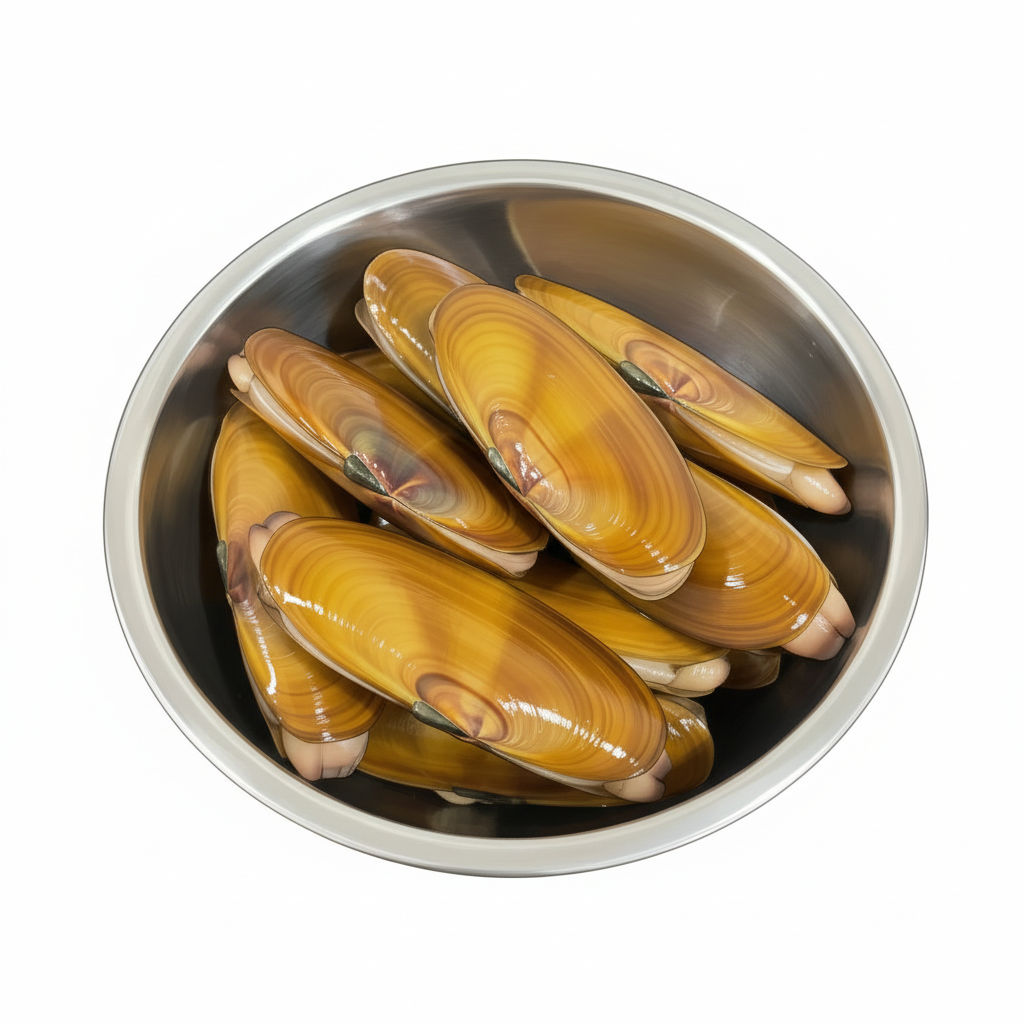
Image: Razor Clam Illustration
Mat-jogae Razor Clam
Article by Gil "hannaone" © Copyright 2007-2026. All rights reserved.
맛조개 | mat-jogae
Ingredient Name: Mat‑jogae
Korean Spelling: 맛조개
English Name: Razor Clam, Pacific Razor Clam
Classification: Seafood • Shellfish • Mollusk
🌐 General Information
Mat‑jogae (맛조개) refers to the Pacific razor clam, a long, narrow bivalve prized in Korean coastal cuisine for its tender texture, sweet brininess, and clean ocean flavor. The clam’s elongated shell—resembling the shape of a straight razor—houses a surprisingly meaty interior, making it a favorite among seafood lovers who enjoy both delicacy and substance.
These clams thrive in tidal mudflats along Korea’s west and south coasts, where they are harvested by hand or through traditional salt‑sprinkling methods that coax them to the surface. Their flavor is often described as siwonhan (refreshing, cooling) with a natural sweetness that intensifies when lightly cooked.
Mat‑jogae are used in a range of dishes, from grilled seafood platters to clear soups, and are appreciated for their versatility and quick cooking time.
🛒 Shopping & Selection
Mat‑jogae can be found in:
• Korean markets with robust seafood sections
• Large Asian supermarkets (e.g., 99 Ranch, Uwajimaya, T&T Supermarket)
• Some coastal fish markets
• Frozen seafood sections in specialty stores
What to look for (Live Clams):
• Closed shells — or shells that close quickly when tapped
• Fresh ocean scent — never fishy, sour, or ammonia‑like
• Moist, intact shells — cracks or dryness indicate poor handling
Frozen Clams:
• Packaging should be fully sealed
• No off‑odors when opened
• Minimal ice crystals (a sign of proper freezing and storage)
🧊 Storage
Short‑Term Storage (Live, In Shell)
• Store in the refrigerator in an open container (bowl, colander)
• Cover with a damp towel to maintain humidity
• Do NOT store in water or directly on ice—this kills the clams
• Use within 2–3 days (up to 4 days maximum)
Purging Before Storage:
Place clams in a shallow container of lightly salted water for 1–2 hours (or overnight) to remove sand. Drain and store as above.
Long‑Term Storage (Frozen)
Shucked Meat:
• Clean and remove from shells
• Store in airtight or vacuum‑sealed bags
• Freeze for up to 3 months for best quality
Frozen in Shell:
• Live clams may be frozen in moisture‑vapor‑resistant bags
• Texture will be slightly softer after thawing but still suitable for soups and stir‑fries
🔪 Common Preparation
• Purging: Soak in salted water to remove sand and grit
• Cleaning: Rinse thoroughly under cold water
• Shucking: Open the shell and remove the meat for soups, stir‑fries, or slicing
• Trimming: Remove the dark stomach contents if desired for a cleaner flavor
Razor clams cook very quickly—overcooking can make them tough, so most dishes rely on brief grilling, blanching, or flash‑cooking.
🍲 Culinary Uses
• Jogaegui (조개구이) — Grilled Clams
A classic preparation where mat‑jogae are grilled over open flame until just opened. Often served with:
• Chogochujang (vinegar chili paste)
• Soy sauce with wasabi
• Garlic‑butter or herb sauces in modern variations
• Jogaetang (조개탕) — Clear Clam Soup
A light, refreshing broth highlighting the clam’s natural sweetness. Known for its siwonhan‑mat, it is often seasoned simply with:
• Radish
• Green onion
• Garlic
• A touch of gochugaru for aroma
• Doenjangguk (된장국) with Clams
Razor clams add a sweet, oceanic depth to soybean paste soup, balancing the earthiness of doenjang.
• Stir‑fries
Sliced razor clam meat stir‑fried with vegetables, noodles, or spicy sauces. Quick cooking preserves tenderness.
• Hot Pot & Mixed Seafood Dishes
Their fast cooking time makes them ideal for communal dishes where seafood is added in stages.
🔄 Substitutes
Closest Substitutes
• Manila clams (바지락) — similar sweetness and briny clarity
• Hard‑shell clams — firmer but comparable flavor
• Small razor clam varieties — nearly identical in texture
Other Options
• Mussels — richer flavor, excellent in soups
• Oysters or scallops — soft, sweet, and ideal for stews
• Shrimp — different texture but similar delicate sweetness when chopped
📜 Historical & Cultural Notes
Mat‑jogae harvesting is deeply tied to Korea’s mudflat culture, especially in regions like Jeolla, Chungcheong, and parts of Gyeongsang. Traditional gathering involves sprinkling salt on the clam’s burrow, causing it to rise to the surface—a method still used today during seasonal festivals and coastal tourism events.
🏷️ Other Names
• Pacific Razor Clam
• Korean Razor Clam
• Mat‑jogae (맛조개)
• Jogae (조개) — general term for clams
📝 Miscellaneous Information
• Razor clams are high in protein, vitamin B12, iron, and omega‑3 fatty acids
• Overcooking can cause toughness—most dishes rely on brief, high‑heat cooking
• When grilling, the clams often release flavorful juices that can be spooned over rice or used as a dipping broth
• In Korea, mat‑jogae are sometimes enjoyed raw (회) when extremely fresh, though this is less common outside coastal regions
| |||||||||||||||||||||||||||||||||||||||
Mat Jogae Razor Clam
Razor clams have long been valued for their digestibility, light flavor, and nutritional density, making them a favored ingredient in soups meant to restore energy or soothe the stomach. Their association with siwonhan dishes places them firmly within Korea’s culinary tradition of refreshing, broth‑based seafood preparations.
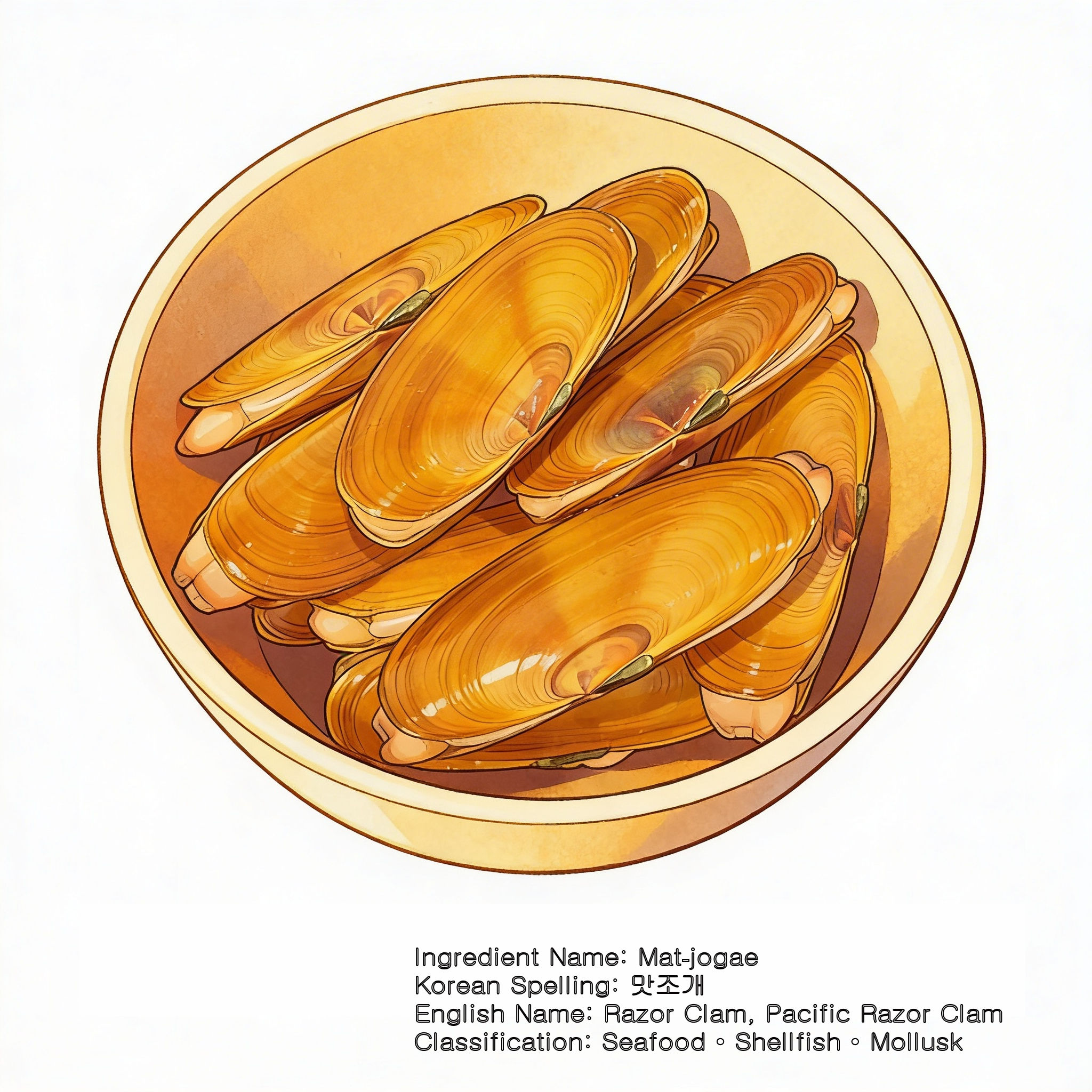
Image: Mat-jogae ingredient card
Their association with siwonhan dishes places them firmly within Korea’s culinary tradition of refreshing, broth‑based seafood preparations.
Check out Wooltari for Korean food and gifts!
Find it on Amazon! Purchases made through these links help support this site. As an Amazon Associate, we earn from qualifying purchases.