Book of Ingredients
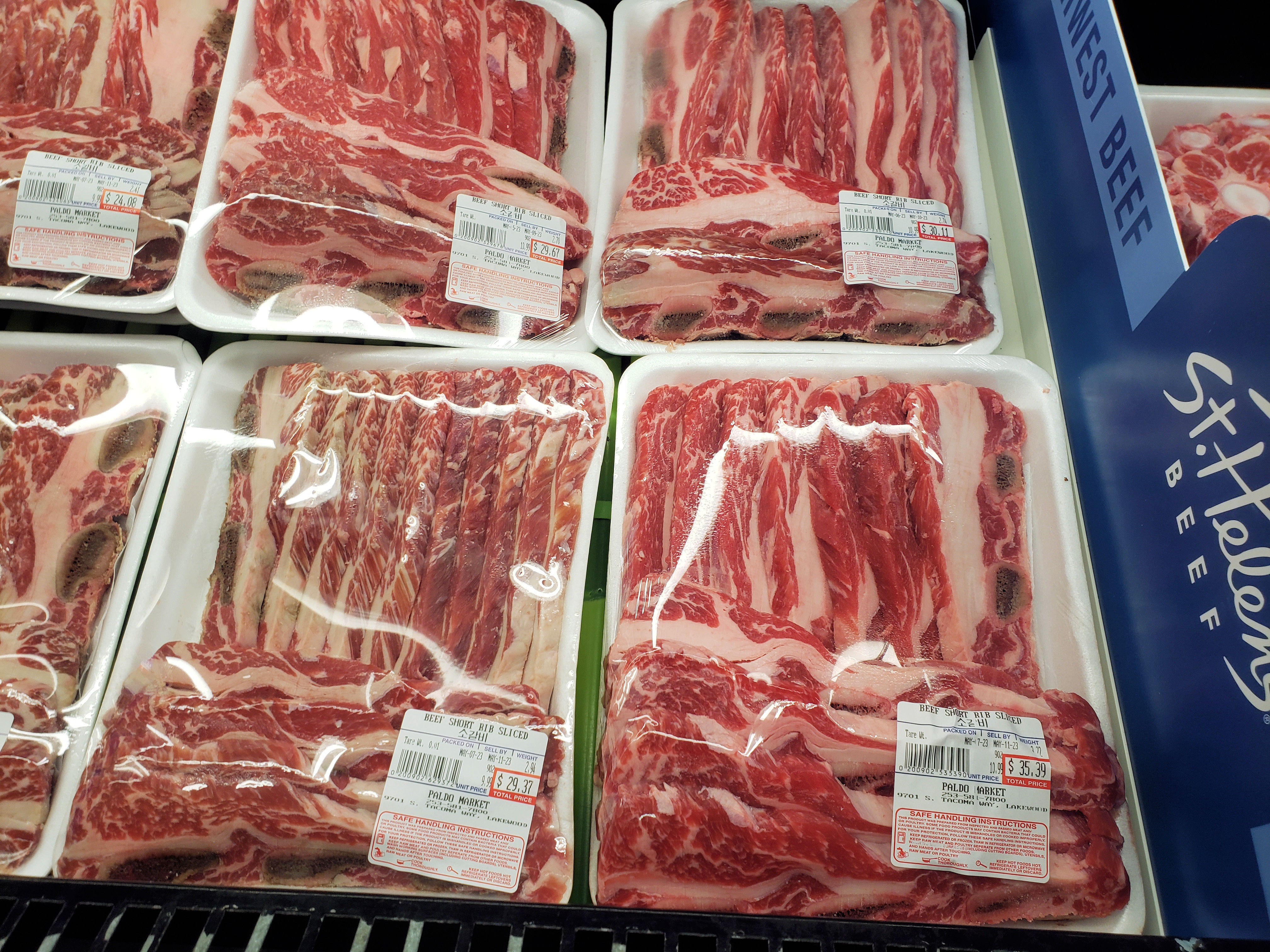
Image by hannaone: LA Galbi in the market
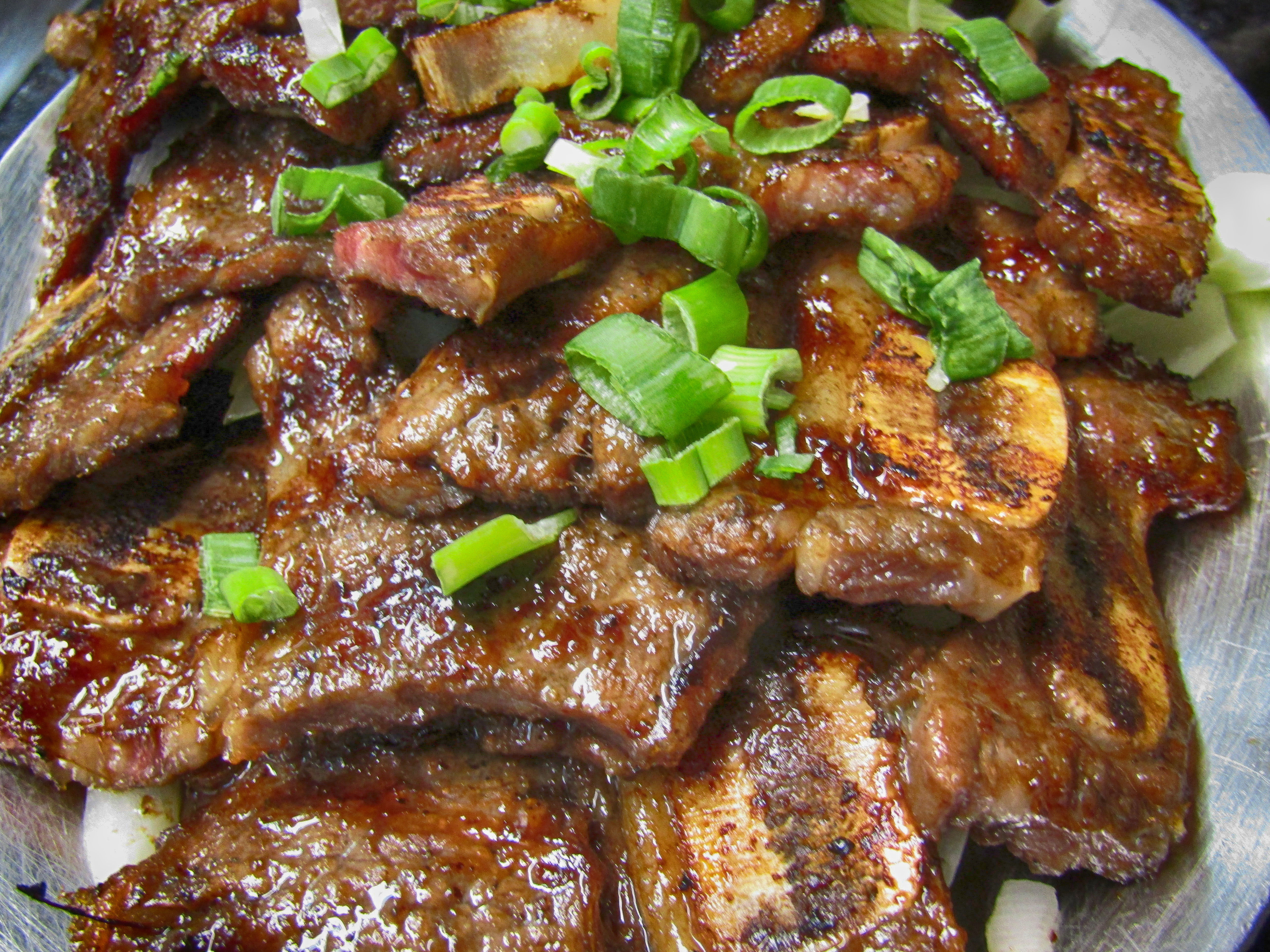
Image by hannaone: LA Galbi, grilled
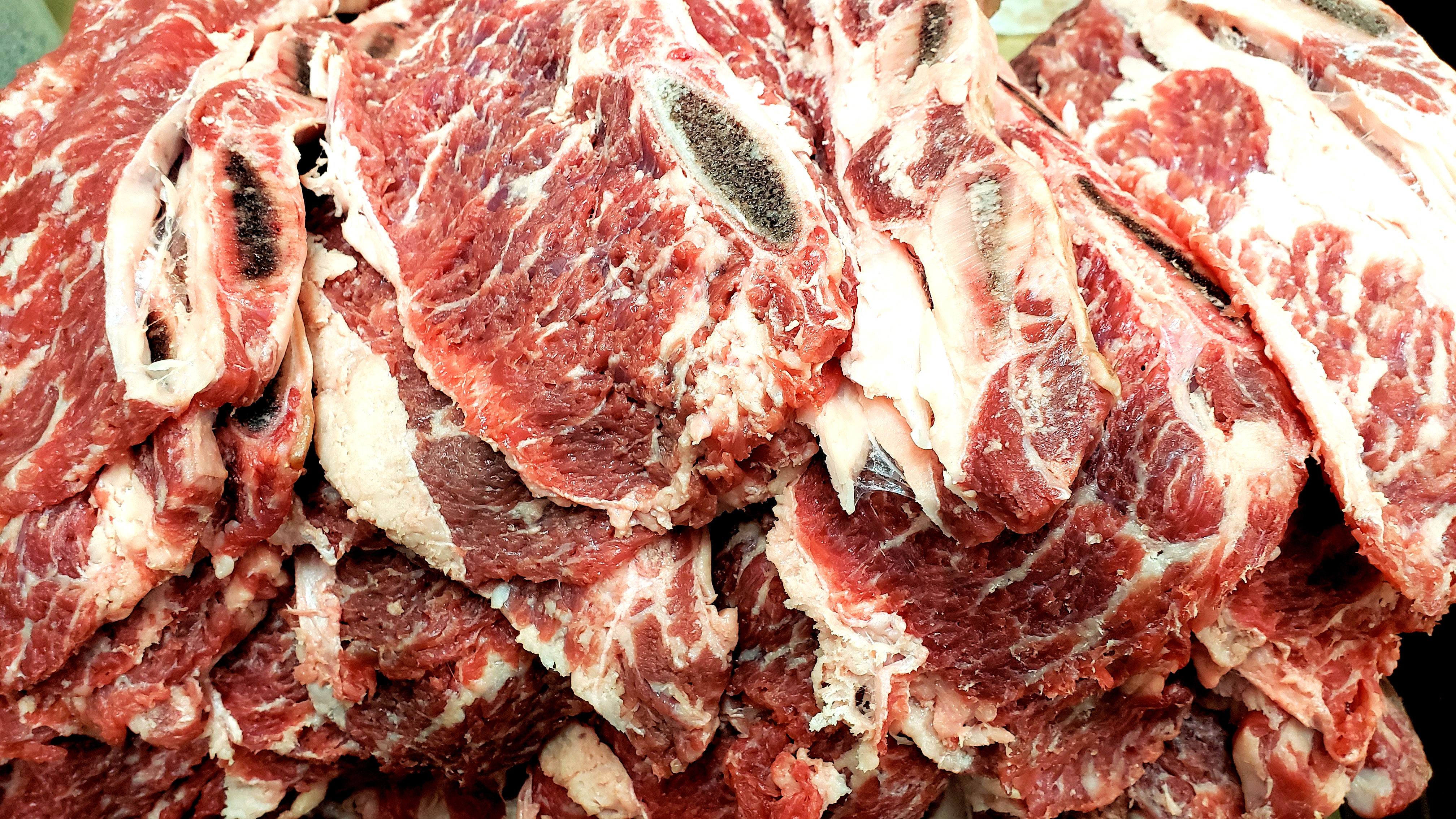
Image by hannaone: Pounded LA galbi
LA Galbi Beef Short Ribs
Article by Gil "hannaone" © Copyright 2007-2026. All rights reserved.
LA 갈비/엘에이 갈비 | LA Galbi
Ingredient Name: LA Galbi
Korean Spelling: LA 갈비 or 엘에이 갈비
English Name: L.A. Style Beef Short Ribs
Classification: Meat • Beef
General Information
L.A. style galbi is a thin flanken cut where the ribs are sliced across the bone to a thickness of about 1/8 to 1/4 inch. Each strip contains three to four oval bone sections. This cut is widely associated with Korean barbecue in North America and differs from the traditional Korean "wang galbi" (왕갈비), which features thicker, lengthwise cuts of the ribs.
L.A. galbi is favored for its ease of cooking and marinating as well as being less expensive than King cut Galbi. Some cooks and restaurants marinate it in a soy-based sauce to infuse deep umami flavors, while others opt for grilling the meat plain, emphasizing the natural richness of well-marbled short ribs.
Shopping and Selecting
Larger Korean markets with a dedicated meat counter often carry pre-cut L.A. galbi, ready for immediate use. Many mainstream markets also carry flanken cut ribs, but these may be thicker than found in Korean markets. Pounding with a mallet can thin as well as tenderize the thicker meat.
When selecting the best L.A. galbi, consider:
• Color: A deep red or burgundy hue indicates freshness and quality.
• Marbling: A generous amount of intramuscular fat ensures tenderness and flavor.
• Cut: Look for even thickness (1/8 to 1/4 inch) for consistent cooking.
• Freshness: The meat should be firm to the touch, without excessive liquid or off-putting odors. Avoid cuts that appear gray or brown.
Storage and Handling
To preserve quality and prevent spoilage:
• Refrigeration: Keep fresh ribs in the coldest section of the refrigerator (35-40°F). They are best consumed within five days, though storage below 34°F can extend freshness to around eight days.
• Freezing: For long-term storage, use airtight packaging (such as vacuum-sealing) to prevent freezer burn. Properly stored, L.A. galbi remains good for six to twelve months in the freezer, with vacuum sealing further extending quality to around a year.
• Preparation Tip: Before cooking, rinse the meat in cold water to remove bone fragments, then pat dry for optimal marinating and grilling.
Common Preparation
The most iconic use for L.A. galbi is in Korean barbecue, where the meat is grilled to caramelized perfection. Typically, the ribs are tenderized with a mallet before being marinated in a sweet-savory sauce featuring soy sauce, sugar, garlic, sesame oil, and fruit puree (such as Korean pear or apple) to enhance tenderness. Grilled over an open flame, the ribs develop a smoky char that deepens their flavor.
Beyond barbecue, minced versions of this cut can be used for tteok galbi (떡갈비), a Korean-style meatball, or other creative dishes.
Used In
• LA Galbi (Korean BBQ) – The most common dish featuring this cut.
• Tteok Galbi (Minced Rib Patties) – A preparation where the rib meat is finely chopped and molded into patties.
• Galbi Jjim (Braised Short Ribs) – Though traditionally using thicker cuts, L.A. galbi can also be adapted for this slow-cooked dish.
Substitutes
If L.A. galbi isn't available, try:
• Wang Galbi (왕갈비) – The traditional thick-cut ribs, often used in Korean BBQ.
• Boneless Beef Short Rib – While lacking the signature bone-in presentation, this offers similar texture and taste.
| |||||||||||||||||||||||||||||||||||||||||||||||||||||||||||
Galbi Beef Short Ribs
LA Galbi is a variation of Korean cuisine's traditional Galbi (short rib) dish which actually originated outside Korea. This variation uses a flanken cut beef short rib. The term “flanken” comes from German and Yiddish, meaning “flank”. Flanken-cut short ribs are taken from the ribs that span from the back toward the belly of the cow and may have originated in Eastern European Jewish cuisine.
The actual origin of LA Galbi in not very clear and there are several theories surrounding this variation.
One theory is that Koreans in Los Angeles borrowed the flanken cut from Jewish cuisine, and then prepared this new cut with traditional marinade and grilling style.
Another theory is that LA Galbi was actually created by the Korean community in Hawaii, then became popularized by Korean restaurants in Los Angeles.
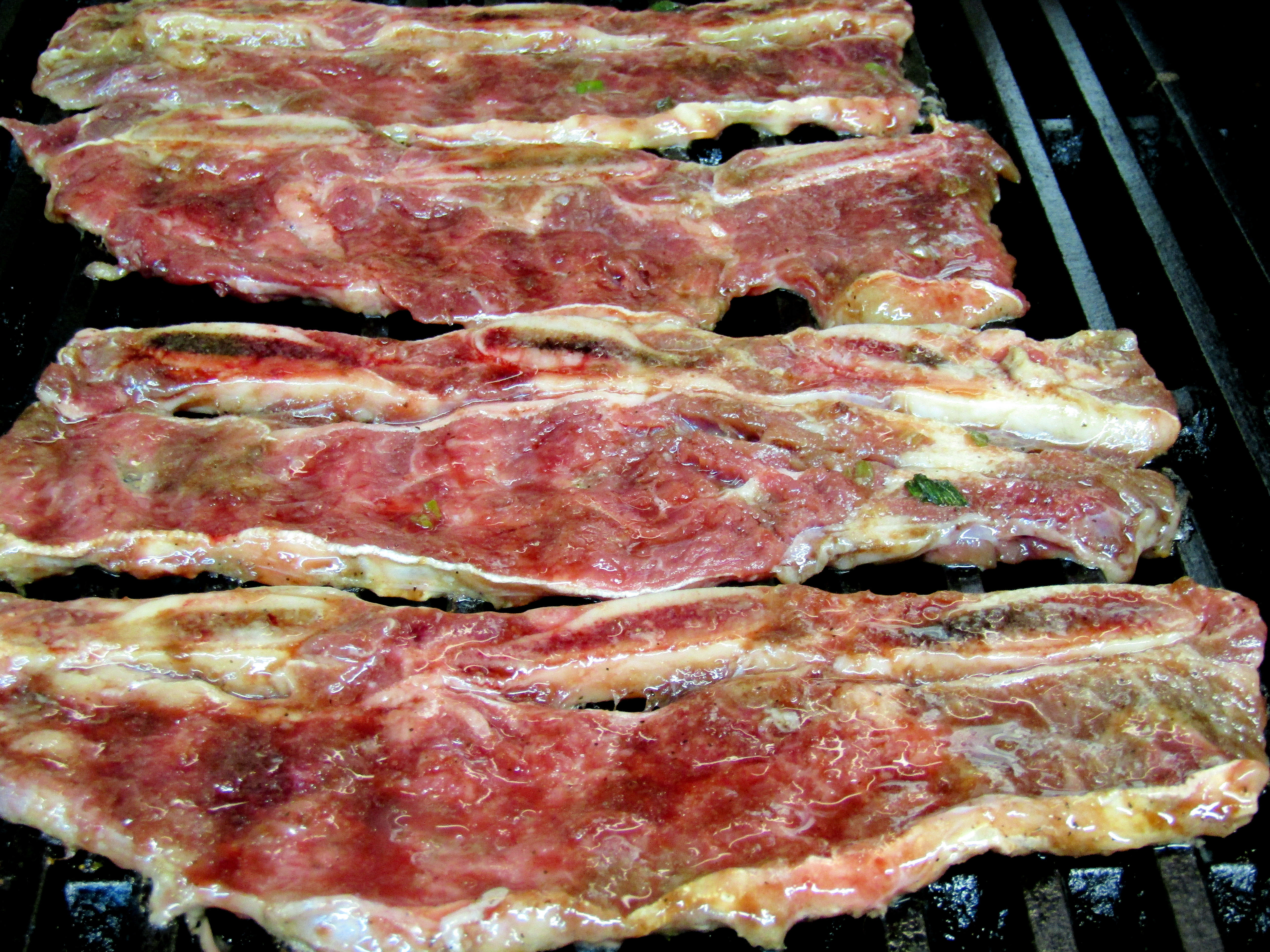
Image by hannaone: LA Galbi on the grill
Yet another theory is that the L A in LA Galbi comes from the first two letters of the word Lateral, as in lateral cut.
Check out Wooltari for Korean food and gifts!
Find it on Amazon! Purchases made through these links help support this site. As an Amazon Associate, we earn from qualifying purchases.