Book of Ingredients
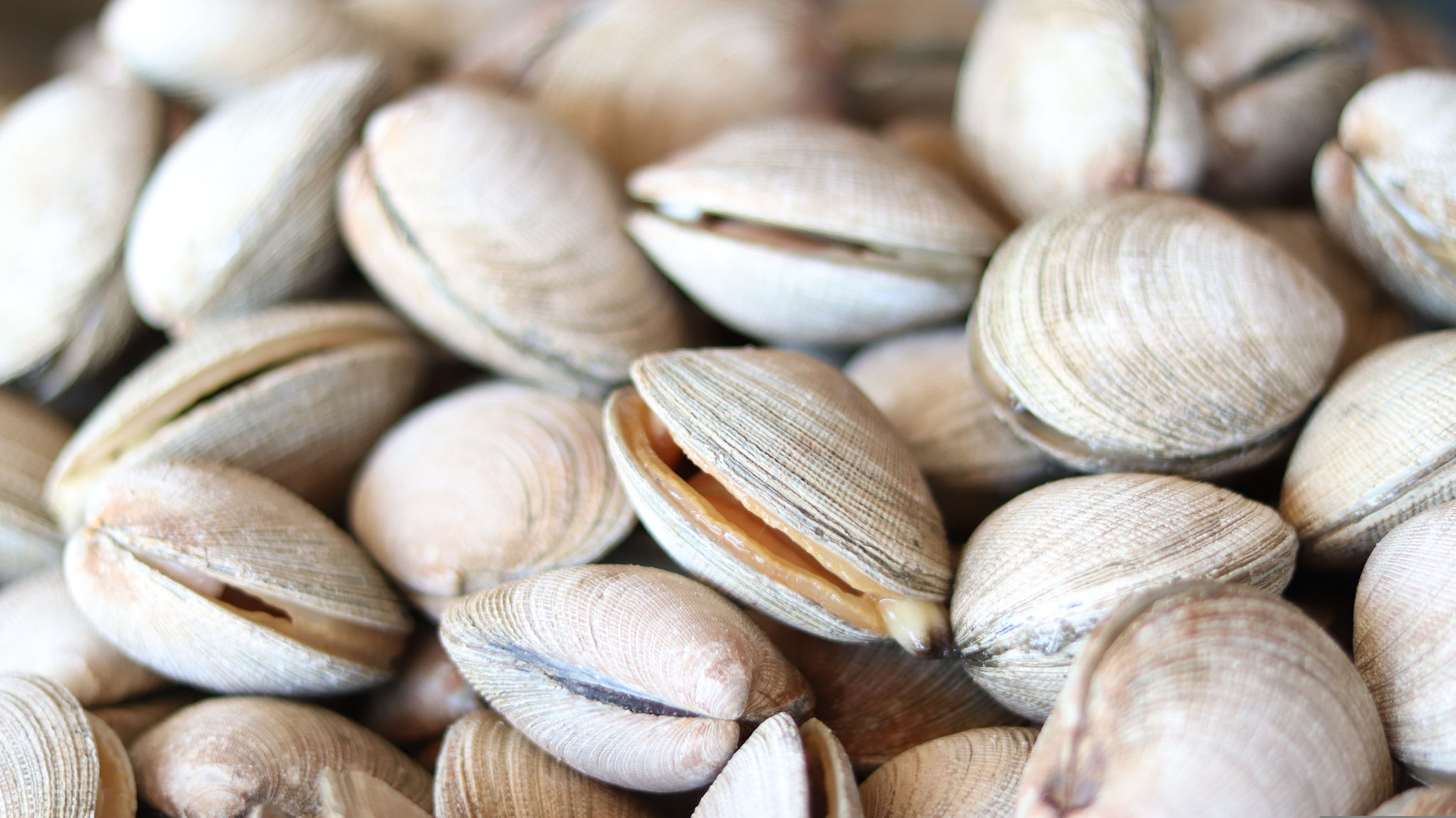
Image from Pixabay: Bajirak
Bajirak Manilla Clam
Article by Gil "hannaone" © Copyright 2007-2026. All rights reserved.
바지락 | bajirak
Ingredient Name: Bajirak
Korean Spelling: 맛조개
English Name: Manila Clam • Little Neck Clam
Classification: Seafood • Shellfish • Mollusk
🌐 General Information
Bajirak (바지락), known in English as the short‑neck clam or Manila clam, is one of the most widely used shellfish in Korean home cooking. These small, oval‑shaped clams are appreciated for their tender bite, clean brininess, and ability to create a naturally savory broth with almost no effort.
🛒 Shopping & Selection
Manila clams are widely available in East and Southeast Asian markets, Korean grocery stores, and many large mainstream supermarkets. Their popularity and long shelf life make them one of the easiest shellfish to source.
What to Look For (Live Clams)
- Closed shells or shells that snap shut when tapped
- Fresh ocean scent—never sour, fishy, or ammonia‑like
- Moist, intact shells without cracks or dryness
- Active response when handled (a sign of life and freshness)
Frozen Clams
- Packaging should be fully sealed
- No off‑odors when opened
- Minimal ice crystals, which indicate proper freezing and storage
Frozen clams are convenient for soups and stews, though they won’t have the same plumpness as fresh.
🧊 Storage
Short‑Term Storage (Live, In Shell)
- Keep clams in the refrigerator in an open container (bowl or colander)
- Cover with a damp towel to maintain humidity
- Do NOT store in water or directly on ice—this suffocates the clams
- Use within 2–3 days (up to 4 days at most)
Purging Before Storage
To remove sand and grit:
- Place clams in a shallow container of lightly salted water
- Soak for 1–2 hours (or overnight for heavily sandy clams)
- Drain and store as above
Long‑Term Storage (Frozen)
Shucked Meat
- Remove meat from shells and clean thoroughly
- Store in airtight or vacuum‑sealed bags
- Freeze for up to 3 months for best quality
Frozen in Shell
- Live clams can be frozen in moisture‑vapor‑resistant bags
- Texture becomes slightly softer after thawing
- Still excellent for soups, jjigae, and stir‑fries
🔪 Common Preparation
- Purging: Soak in salted water to remove sand
- Cleaning: Rinse under cold running water
- Shucking: Open the shell and remove the meat for soups, stir‑fries, or slicing
- Trimming: Some cooks remove the dark stomach contents for a cleaner flavor
Bajirak cook very quickly. Overcooking makes them tough, so most dishes rely on brief boiling, steaming, or flash‑cooking. When the shells open, they’re done.
🍲 Culinary Uses
Classic Korean Dishes
- Bajirak Kalguksu (바지락 칼국수)
Knife‑cut noodles in a clear, briny broth with clams, zucchini, and potatoes. A beloved comfort food.
- Bajirak Soondubu Jjigae (바지락 순두부찌개)
Soft tofu stew enriched with clams for a deeper, cleaner seafood flavor.
- Bajirak Tang (바지락탕)
A simple, refreshing soup seasoned with green onions, garlic, and sometimes cheongyang peppers.
- Bajirak Suljjim (바지락 술찜)
Clams steamed with soju or sake, garlic, and butter—light, aromatic, and perfect with drinks.
- Bajirak Muchim (바지락 무침)
A spicy, tangy salad made with raw or lightly blanched clams.
- Bajirak Jeotgal (바지락 젓갈)
Salted, fermented clam meat seasoned with chili flakes and aromatics.
- Sujebi (수제비)
Hand‑torn dough soup often made with a clam‑based broth similar to kalguksu.
🔄 Substitutes
Closest Flavor & Texture
- Cockles (Kkomak, 꼬막):
Especially blood cockles—chewy, bouncy, and excellent in spicy dressed dishes.
- Dongjuk (Surf Clams / Duck Clams):
Slightly lighter in flavor but very similar; often used interchangeably in soups.
- Moshi Jogae (모시조개):
Asian hard clams; slightly larger but a common substitute in broths.
- Frozen Clam Meat:
Convenient for soups and stews when fresh clams aren’t available.
For Soups & Stews (Kalguksu, Soondubu‑jjigae)
- Mussels (Honghap, 홍합):
Readily available and add a deep, savory seafood note.
- Shrimp/Prawns:
Different texture but provide sweetness and body to soft tofu stews.
- Anchovy‑Kelp Stock (Myulchi Yuksu):
A clam‑free alternative that still delivers the umami backbone needed for kalguksu.
📜 Historical & Cultural Notes
Bajirak have long been tied to Korea’s coastal communities, where tidal flats provided an accessible source of protein for families with limited means. Clam gathering was often a communal activity—children and adults alike combing the sand during low tide.
In Korean cooking, bajirak are valued not only as an ingredient but as a broth‑maker. A handful of clams can transform plain water into a clean, savory stock, which is why they appear so frequently in everyday soups and noodle dishes. Their role in dishes like kalguksu reflects Korea’s broader tradition of building flavor from simple, natural ingredients.
🏷️ Other Names
- English: Manila Clam, Short‑Neck Clam
- Korean: 바지락 (Bajirak)
- Japanese: アサリ (Asari)
- Scientific Name: Venerupis philippinarum
📝 Miscellaneous Information
- Bajirak are high in protein and low in fat, with notable amounts of iron, vitamin B12, and omega‑3 fatty acids.
- Their shells vary from pale beige to patterned brown depending on habitat.
- In Korea, bajirak are often sold in mesh bags, already partially purged by the supplier.
- They are one of the most sustainable shellfish options due to efficient aquaculture practices.
| |||||||||||||||||||||||||||||||||||||||||||||||||||||||||||
Bajirak Short Neck Clam
Along the Korean Peninsula, bajirak are commonly harvested from sandy tidal flats—an environment that has shaped much of Korea’s coastal food culture. Historically, they were considered an everyday, “peasant” ingredient: abundant, inexpensive, and easy to gather.
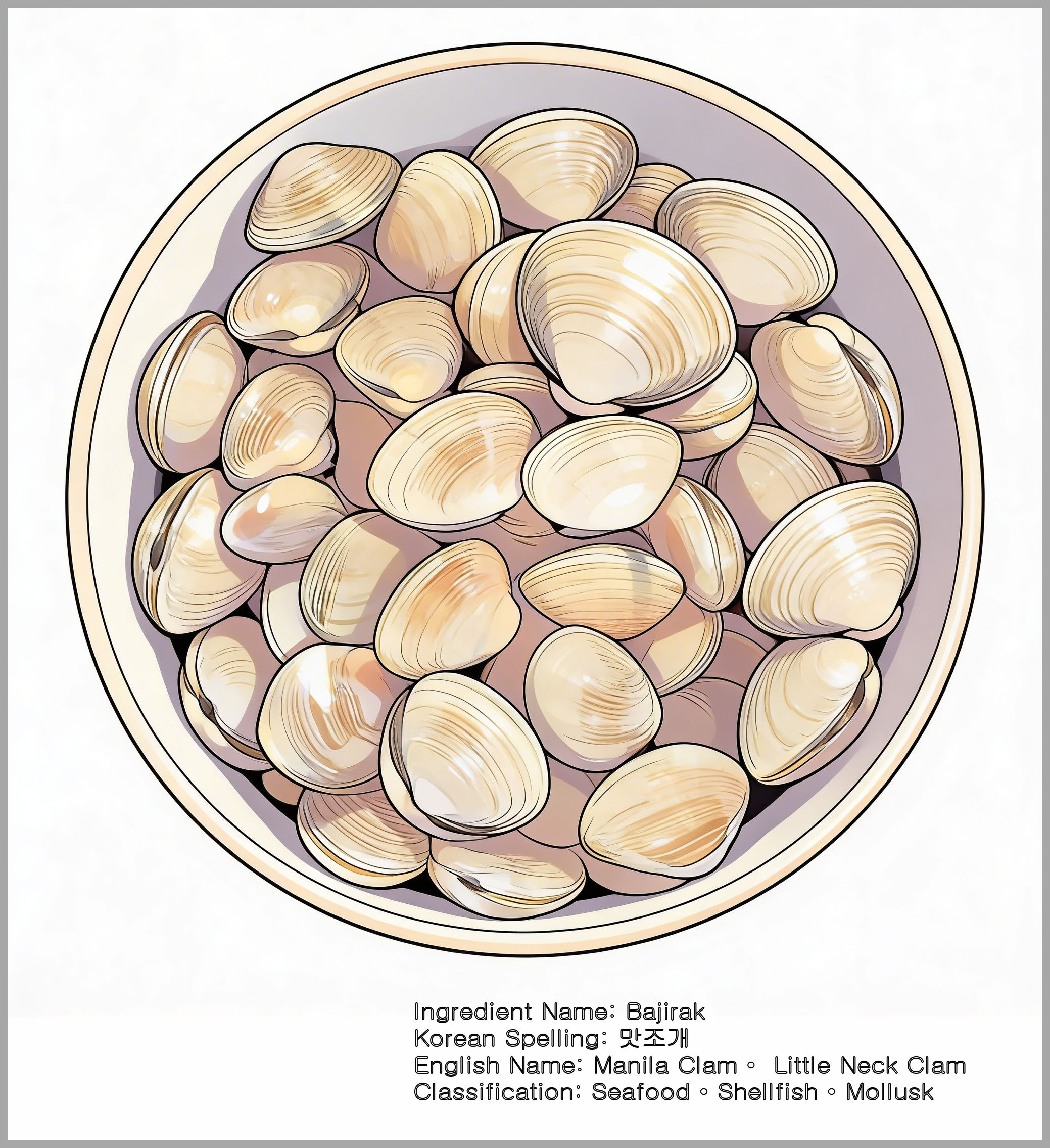
Image: Bajirak ingredient card
Today, they remain a staple in soups, stews, noodle dishes, and seafood platters, valued for their versatility and mild, ocean‑fresh flavor.
Check out Wooltari for Korean food and gifts!
Find it on Amazon! Purchases made through these links help support this site. As an Amazon Associate, we earn from qualifying purchases.