Recipes: Noodles
Article by Gil "hannaone" © Copyright 2007-2026. All rights reserved.
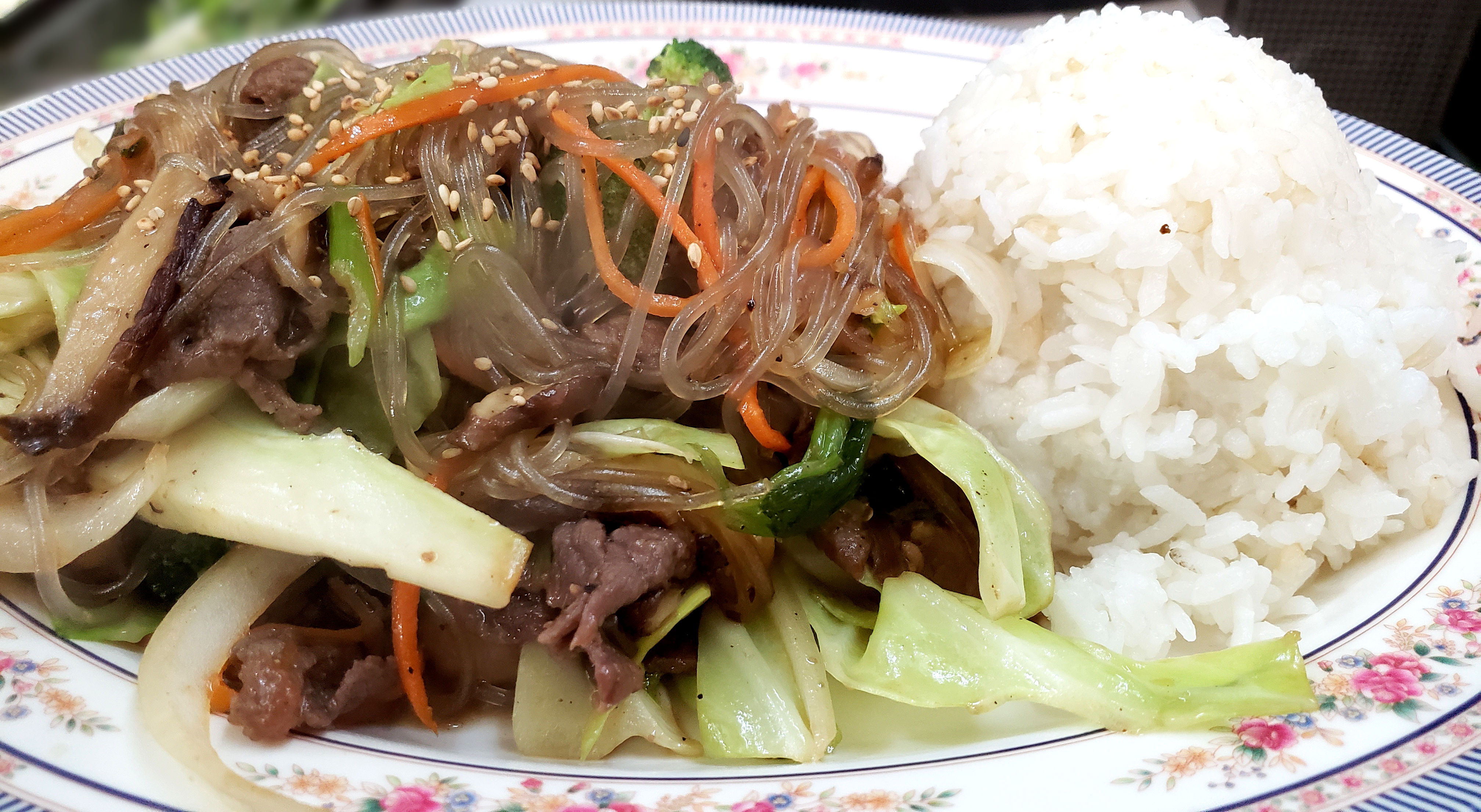
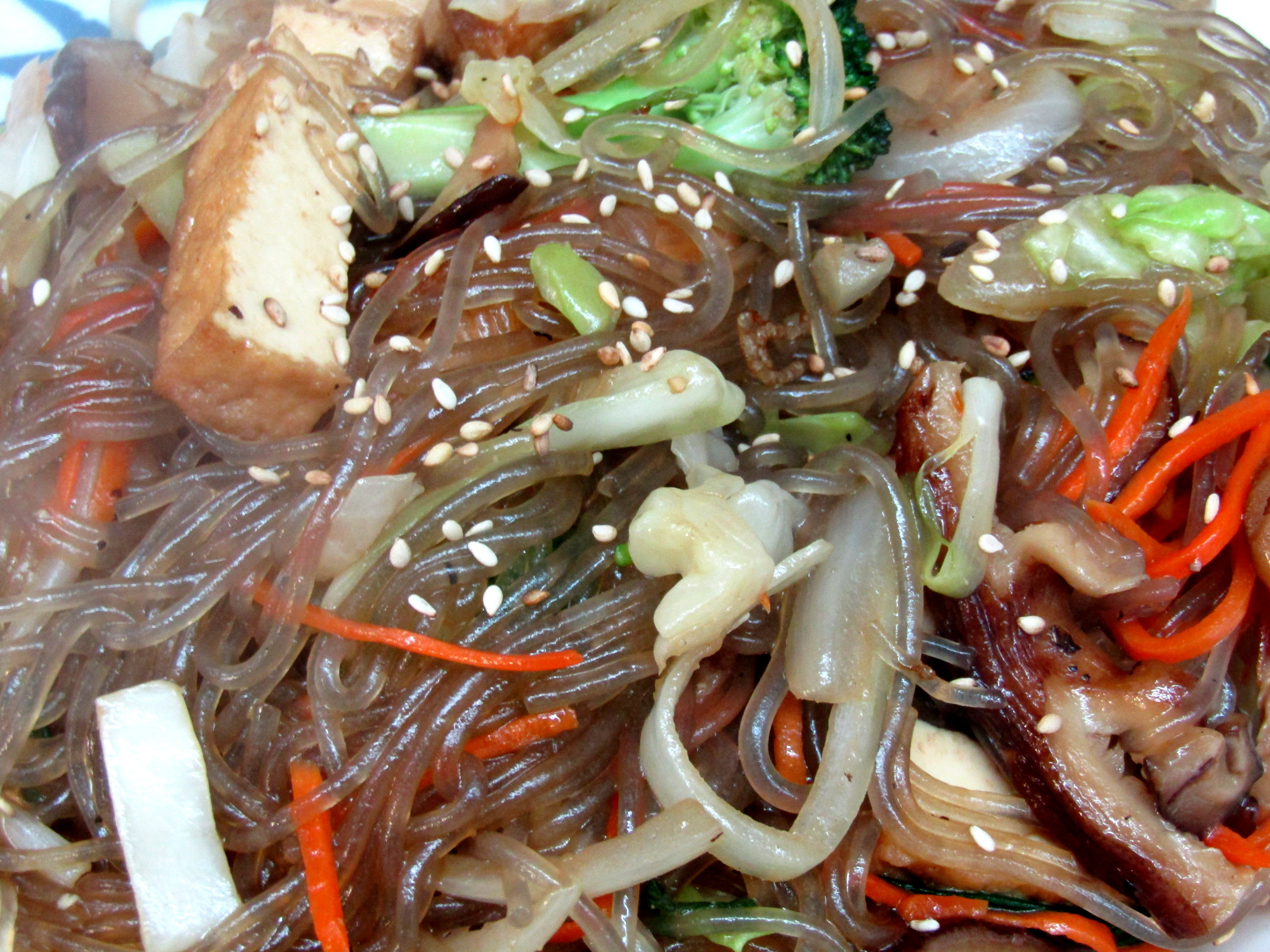
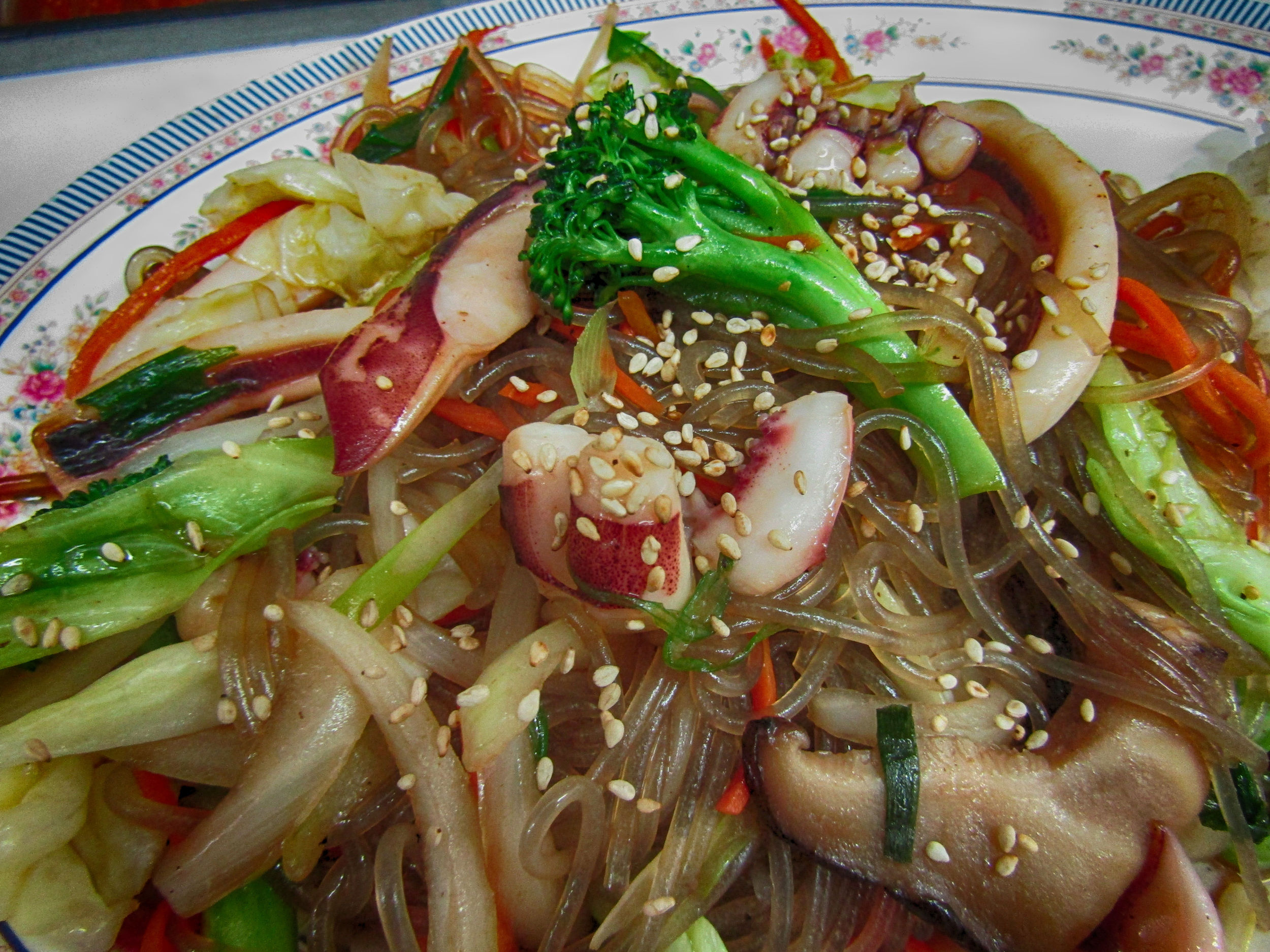
Image by hannaone: Japchae
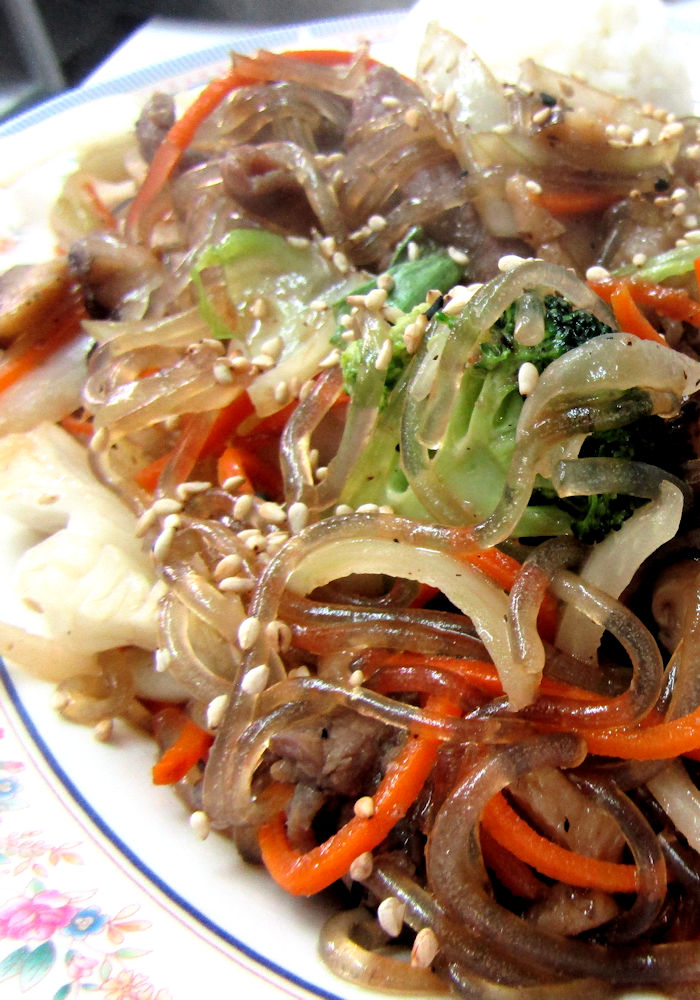
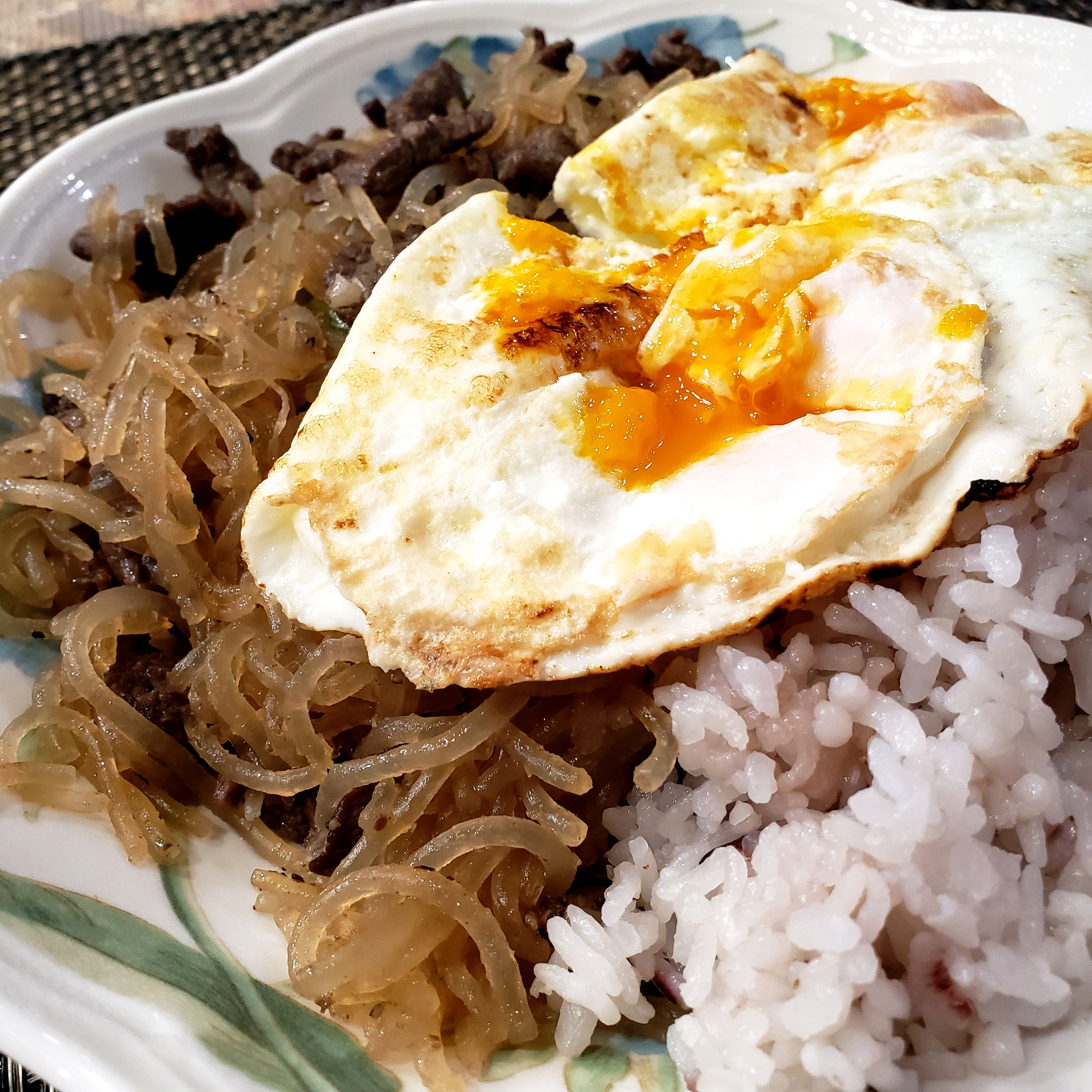
Japchae Stir-fried Clear Noodles
잡채 | Japchae
Japchae is built around Korean glass noodles, dangmyeon (당면)—springy, translucent noodles made from sweet potato starch. Their naturally chewy texture makes them the perfect base for a colorful stir‑fry of meat and vegetables tossed in a savory‑sweet sauce.
A popular dish enjoyed by our customers.
For the Royal Version Click Here or scroll down
Servings: 4
Recipe Type: Noodle, stir fry
Ingredients
1 12 ounce package Korean Starch Noodle (Korean vermicelli, sweet potato starch)
4 ounces of Beef, thinly sliced (lean)
2 medium white mushrooms, sliced
1 bunch fresh Spinach (approximately 3 ounces)
2 Green or Spring onion, cut into 1 inch sections
1/2 medium white or yellow onion, sliced
1 small Carrot, grated
1 teaspoon roasted Sesame seed
1/4 cup water
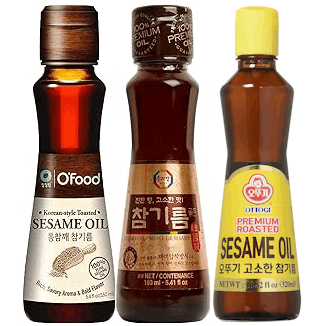
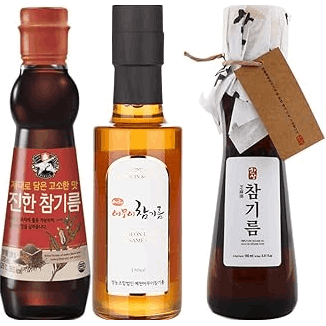
2 tablespoons blended sesame oil
1 teaspoon Soy sauce
1 tablespoon Sugar
Pepper
Salt
Marinade:
1 tablespoon soy sauce
1 tablespoon pure sesame oil
1 tablespoon sugar
1 teaspoon crushed garlic
pepper
salt
Directions
Prepare the starch noodle:
Soak in cool water for about one hour. Pour off excess water then rinse in cold water. Drain thoroughly. Cut noodle into 3 inch lengths.
Alternate Method: In a soup pot, bring 1 quart of water to a full boil. Add noodles and boil until soft. Remove from heat and rinse in cold water. Drain thoroughly. Cut noodle into 3 inch lengths.
Make the Marinade:
In a medium mixing bowl add 1 tablespoon soy sauce, 1 tablespoon sesame oil, 1 tablespoon sugar, crushed garlic, and a light sprinkling of salt and pepper. Mix well.
Prepare the beef:
Cut the beef into approximately 1/2 inch by 2 inch strips. Place beef in marinade and roll or mix until beef is completely covered. Let stand at least 15 minutes.
Prepare spinach:
In a soup pot, bring 3 cups of water to full boil. Wash spinach in cold water, then completely immerse it in the boiling water. Remove from heat after 30 seconds and rinse immediately in cold water. Squeeze excess water from spinach.
Cooking:
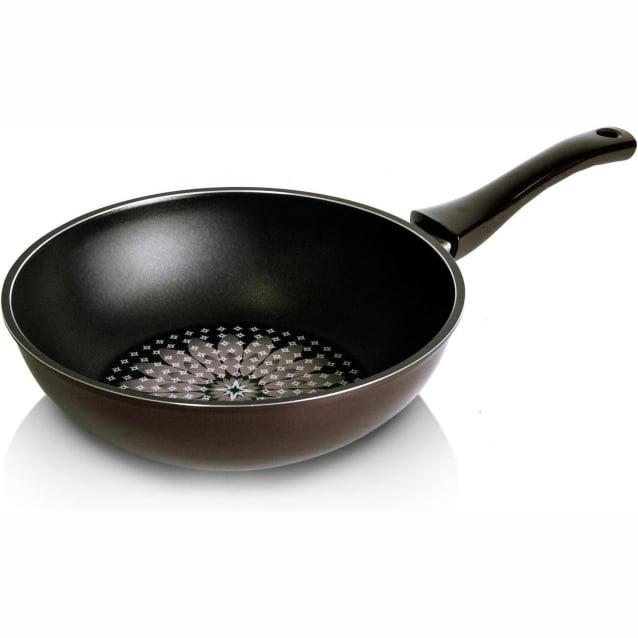
Spread 2 tablespoon sesame oil in a stir fry pan and place over medium heat.
Add beef mixture to hot pan and brown.
Quickly add mushrooms, onion, green onion, and carrot. Stir fry approximately 1 1/2 to 2 minutes.
Add water, noodles, spinach, sesame seed, sugar, and soy sauce.
Stir constantly until liquid is gone.
Final
Remove from heat and serve with an array of Korean banchan dishes and steamed rice.
Royal Version:
Ingredients
Spinach:
1 bunch fresh Spinach (approximately 3 ounces)
1/8 teaspoon salt
1/2 teaspoon toasted sesame seeds
1 teaspoon sesame oil
Mushroom:
1 medium coral mushroom*
2 tablespoons beef or chicken broth
1 teaspoon sesame oil
*Substitute: King Oyster or other large mushroom (approximately 3 ounces)
Doragi (Bellflower root):
3 ounces dried pre-cut doragi (Bellflower root)
3 tablespoons water*
1 teaspoon shiitake powder
2 Green or Spring onion
1 teaspoon sesame oil
* Substitute beef or chicken broth
Carrot:
1 medium carrot
1 teaspoon soy sauce
1 teaspoon sesame oil
1 teaspoon water
1 teaspoon rice syrup (substitute honey or brown sugar)
Broccoli:
1 head broccoli
1 teaspoon soy sauce
1 teaspoon sesame oil
1 teaspoon water
1 teaspoon rice syrup (substitute honey or brown sugar)
Onion:
1 small onion
1 teaspoon sesame oil
1/2 teaspoon soy sauce
Garnish:
2 eggs
1 teaspoon roasted Sesame seed
Directions
Spinach:
In a soup pot, bring 3 cups of water to full boil. Wash spinach in cold water, then completely immerse it in the boiling water. Remove from heat after 30 seconds and rinse immediately in cold water. Squeeze excess water from spinach.
Heat oil in a pan over high heat for thirty seconds.
Add spinach and broth, and stir fry for thirty(30) to forty five(45) seconds.
Remove from heat and set aside.
Carrot:
Shred or slice and cut into "matchsticks", rinse in cold water, then drain. Mix the carrot ingredients in a small sauce pan and heat. Add the carrot and sauté over medium low heat until tender-crisp. Carrot should still have some "snap".
Broccoli:
Tear into individual florets, rinse in cold water, then drain. Bring a pot of water to a boil over high heat, add the broccoli, and cook for three to for minutes. Rinse in cold water and drain. Mix the broccoli ingredients in a small sauce pan and heat. Add the florets and sauté over medium low heat until tender-crisp. Broccoli should still have some "snap".
Onion:
Peel, trim top and bottom, and rinse in cold water. Cut in half from top to bottom, then cut each half into slices roughly 1/8 to 1/4 inch thick. Lightly oil the fry pan, place on stove over medium high heat, add the onions and soy sauce and stir fry about two minutes. Remove from heat and set aside.
Mushroom:
Coral:
Tear the coral mushroom into individual stalks (or small group if the stalks are very slender), rinse well in cold water.
Bring a pot of water to a rapid boil.
Add coral mushroom and return to boil.
Boil for two to three minutes, remove from heat, drain and rinse in cold water.
King Oyster or other large mushroom:
Bring a pot of water to a rapid boil.
Add mushroom and return to boil.
Boil for two to three minutes, remove from heat, drain and rinse in cold water.
Cut the mushroom into thin slivers or slices.
All Types mushroom:
Place oil into a pan over medium to high heat.
Add mushroom and stir fry three to four minutes.
Add broth and green onion, and stir fry 1 additional minute.
Remove from heat and set aside.
Doragi:
Rinse doragi in cold water, drain, then soak about 1 hour.
Drain and rinse again.
Place into a pot of boiling water and cook for ten to twenty minutes, until slightly softened.
Drain and rinse in cold water.
Mix water and shiitake powder.
Place oil into a pan over medium to high heat, heat for thirty seconds.
Add doragi and stir fry three to four minutes.
Add water mix and stir fry 1 additional minute.
Add cut green onion and stir fry thirty(30) seconds.
Remove from heat and set aside.
Eggs:
Separate yolks from whites.
Combine yolks and whip together.
Pour into a hot oiled pan in a thin layer (tilt pan back and forth to cover bottom of pan).
Cook over medium heat until top is just firm, but bottom is not browned, flip and cook 15 to twenty seconds.
Remove from heat and let cool.
Cut into thin strips about 1/8 inch wide by 1 1/2 inch long.
Repeat with egg whites.
Final Mix:
Add all prepared items, except garnish, to a large salad type bowl and toss gently. Transfer to a large serving platter and garnish with alternating white and yellow egg strips. Sprinkle with remaining sesame seed and serve at room temperature with steamed white rice and ban chan.


Comment?