Book of Weight Equivalents
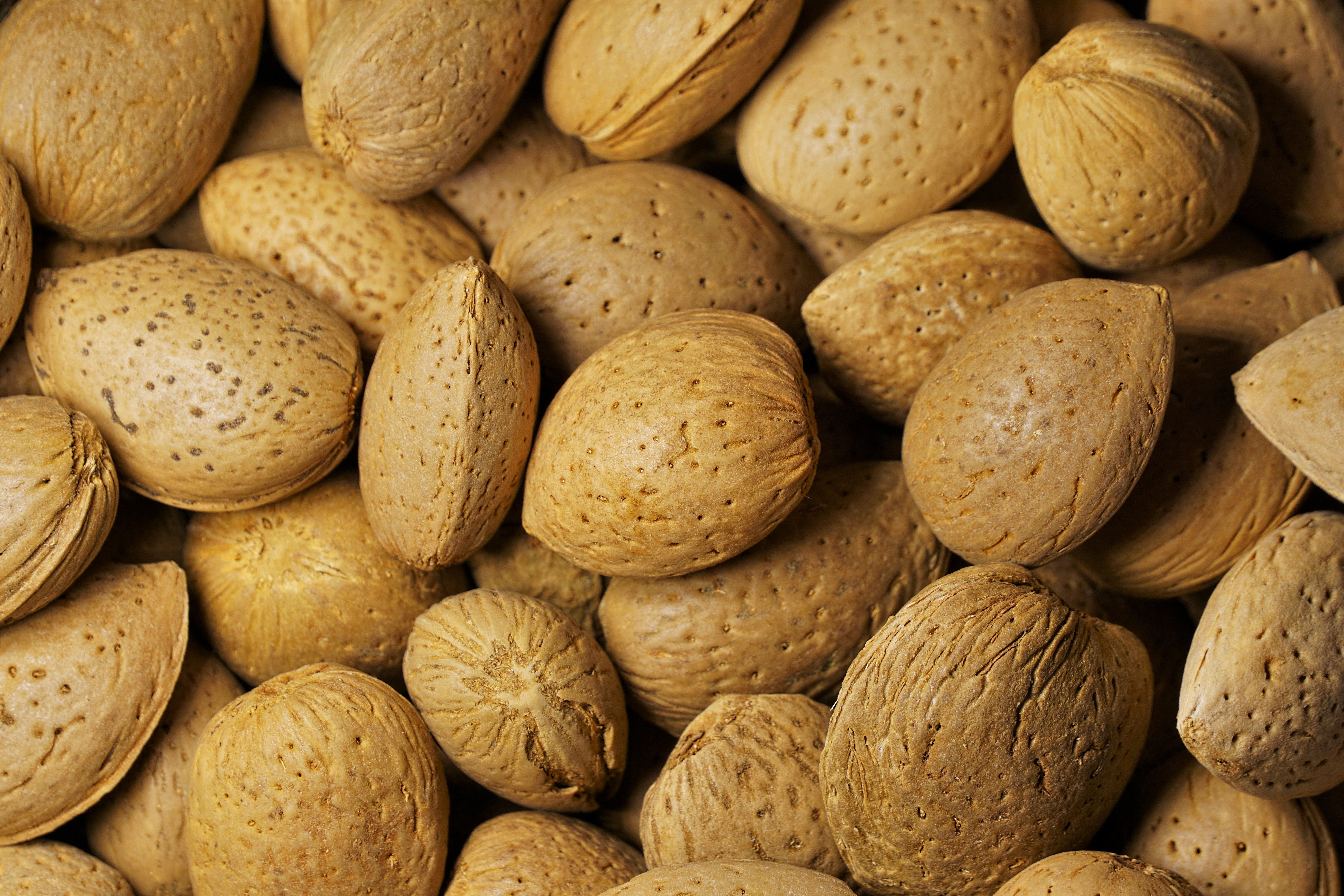
Image by hannaone: Almonds on Pixabay
Weight Equivalents: Almonds
Article by Gil "hannaone" © Copyright 2007-2026. All rights reserved.
Weight and nutrition information primarily sourced through USDA Food Central or Korean Standard Food Composition Tables.
🌐
Origin and History
Almonds are believed to have originated in the region stretching from Iran to Central Asia. They have been cultivated for thousands of years, with early evidence of their consumption dating back to ancient civilizations, including the Egyptians and the Greeks. Almonds were highly valued for their nutritional benefits and were even considered a luxury item in some cultures.
Varieties
There are two main types of almonds:
• Sweet Almonds (Prunus dulcis var. dulcis): These are the most common type, used for direct consumption and in various culinary applications. They have a mild, sweet flavor.
• Bitter Almonds (Prunus dulcis var. amara): These almonds contain amygdalin, which can produce toxic cyanide when consumed in large quantities. Bitter almonds are typically processed to remove the toxins and are used to make almond oil and flavoring extracts.
Within the sweet almond category, there are several popular varieties:
• Nonpareil: Known for their thin shells and smooth texture, these are often used for snacking and in processed almond products.
• Carmel: A versatile variety with a slightly softer texture, used in baking and cooking.
• Butte: Known for their more robust flavor, often used in almond butter and other processed products.
• Sonora: Long and narrow almonds with a sweet taste, popular for snacking and as a garnish.
Uses
Almonds are incredibly versatile and can be used in a wide range of culinary applications:
• Snacking: Enjoyed on their own, roasted, or flavored.
• Baking: Used in cakes, cookies, and pastries, as well as in almond flour for gluten-free baking.
• Cooking: Added to salads, stir-fries, and as a crunchy topping for various dishes.
• Dairy Alternatives: Processed into almond milk, almond butter, and almond cheese for vegan and lactose-intolerant diets.
• Confectionery: Included in chocolates, nougats, marzipan, and other sweet treats.
Substitutes
If you're looking for substitutes for almonds in recipes, here are a few options:
• Cashews: Offer a similar creamy texture and can be used in both sweet and savory dishes.
• Hazelnuts: Provide a rich, nutty flavor and are great for baking and snacking.
• Pecans: Have a slightly buttery flavor and work well in desserts and salads.
• Walnuts: Offer a robust flavor and can be used in baking, cooking, and snacking.
• Sunflower Seeds: A nut-free alternative with a mild flavor, suitable for those with nut allergies.
| Almonds | |||
|---|---|---|---|
| Common Names: almond, sweet almond Equivalents: 3 ounces whole almonds = 1/2 cup = 65 almonds. | |||
| Almond |
Average Nut |
1.2g | 0.1oz |
| Cup |
Ground |
95g | 3.4oz |
| Cup |
Slivered |
108g | 3.8oz |
| Cup, |
Sliced |
92g | 3.2oz |
| Cup, |
Whole |
143g | 5.0oz |
| Pound, Kernels |
About 368 kernels |
453.6g | 16oz |
Ounces shown are rounded up or down to the nearest tenth of an ounce.
| |||||||||||||||||||||||||||||||||||||||||||||||||||||||||||||||
Weights: Almonds
🌟 Did You Know? — Almond Edition
• Botanical Cousins
Almonds are part of the Prunus genus—the same family as peaches, plums, apricots, and cherries. A peach pit is essentially an almond’s close look‑alike.
• Royal Sustenance
Almonds were treasured in the ancient world. Archaeologists even found them in the tomb of Tutankhamun (c. 1352 B.C.), packed as nourishment for the afterlife.
• A True Zero‑Waste Crop
Every part of the almond fruit has a purpose:
– The fuzzy green hull becomes nutritious dairy cattle feed.
– The hard shell is repurposed as mulch and animal bedding.
– The inner seed is the almond we eat.
• Heavyweight Nutrition
A 1‑ounce serving (about 23 almonds) delivers 6 g of protein plus Vitamin E, calcium, and heart‑healthy monounsaturated fats.
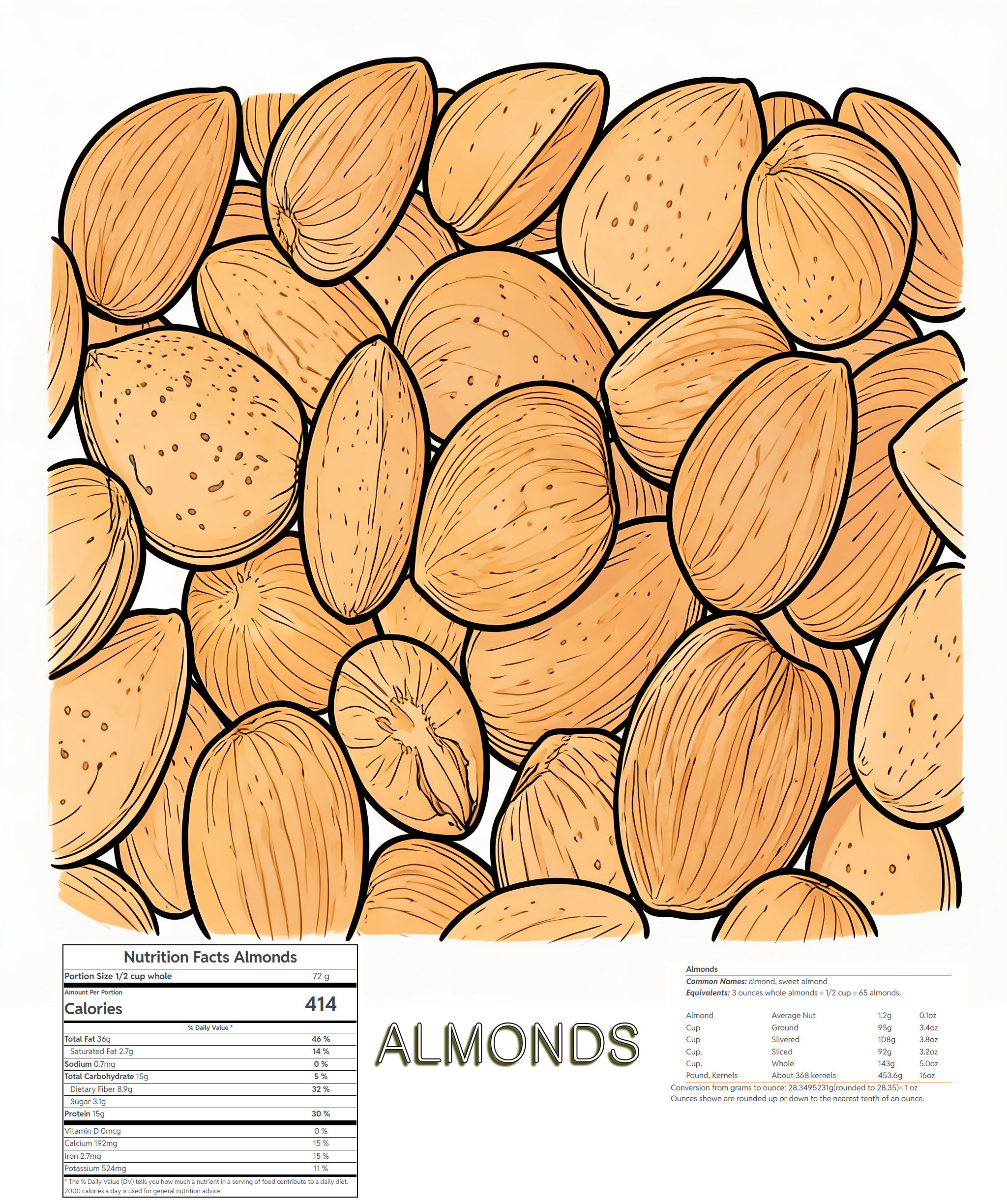
Image: Almond Card
• The “Almond” Brain
The word almond comes from the Greek amygdala. The brain’s emotion‑regulating amygdala is named for its almond‑like shape.
• Saved by the Helicopter
During bloom, almond blossoms are extremely vulnerable to freezing temperatures. Growers sometimes fly helicopters low over orchards to push warmer air downward and protect the flowers.
• Sweet vs. Bitter
Sweet almonds are the familiar edible variety. Bitter almonds contain compounds that release cyanide and must be processed to remove toxins before they’re safe to consume.
Check out Wooltari for Korean food and gifts!
Find it on Amazon! Purchases made through these links help support this site. As an Amazon Associate, we earn from qualifying purchases.


Comment?