In Korean and many other Asian cultures long noodles symbolize a long life.
Korean noodle dishes evolved from ancient imports into a diverse culinary tradition, ranging from royal delicacies like naengmyeon and baekmyeon to everyday favorites like japchae and kalguksu. They embody Korea’s adaptability, regional diversity, and cultural exchanges across centuries.
- The earliest noodles in Asia trace back over 4,000 years in China, and Korea adopted them during the Three Kingdoms period (1st century BCE–7th century CE) through cultural exchange.
- In Korea, noodles were collectively called 국수 (guksu) in native Korean or 면 (myeon) in Sino-Korean.
- Early noodle dishes included 온면 (onmyeon), a hot beef broth noodle soup, and 국수 장국 (guksu jangguk), noodles in clear broth.
👑 Royal Court Cuisine
- During the Joseon Dynasty (1392–1897), noodles became refined court dishes.
- Baekmyeon (white noodles) made from buckwheat and pheasant broth were considered the highest quality.
- Naengmyeon (cold buckwheat noodles), served with beef broth and dongchimi (radish water kimchi), was a summer delicacy in the royal court.
🍜 Regional & Ingredient Diversity
Korea developed many noodle varieties based on local crops:
- Memil guksu (buckwheat noodles) – similar to Japanese soba.
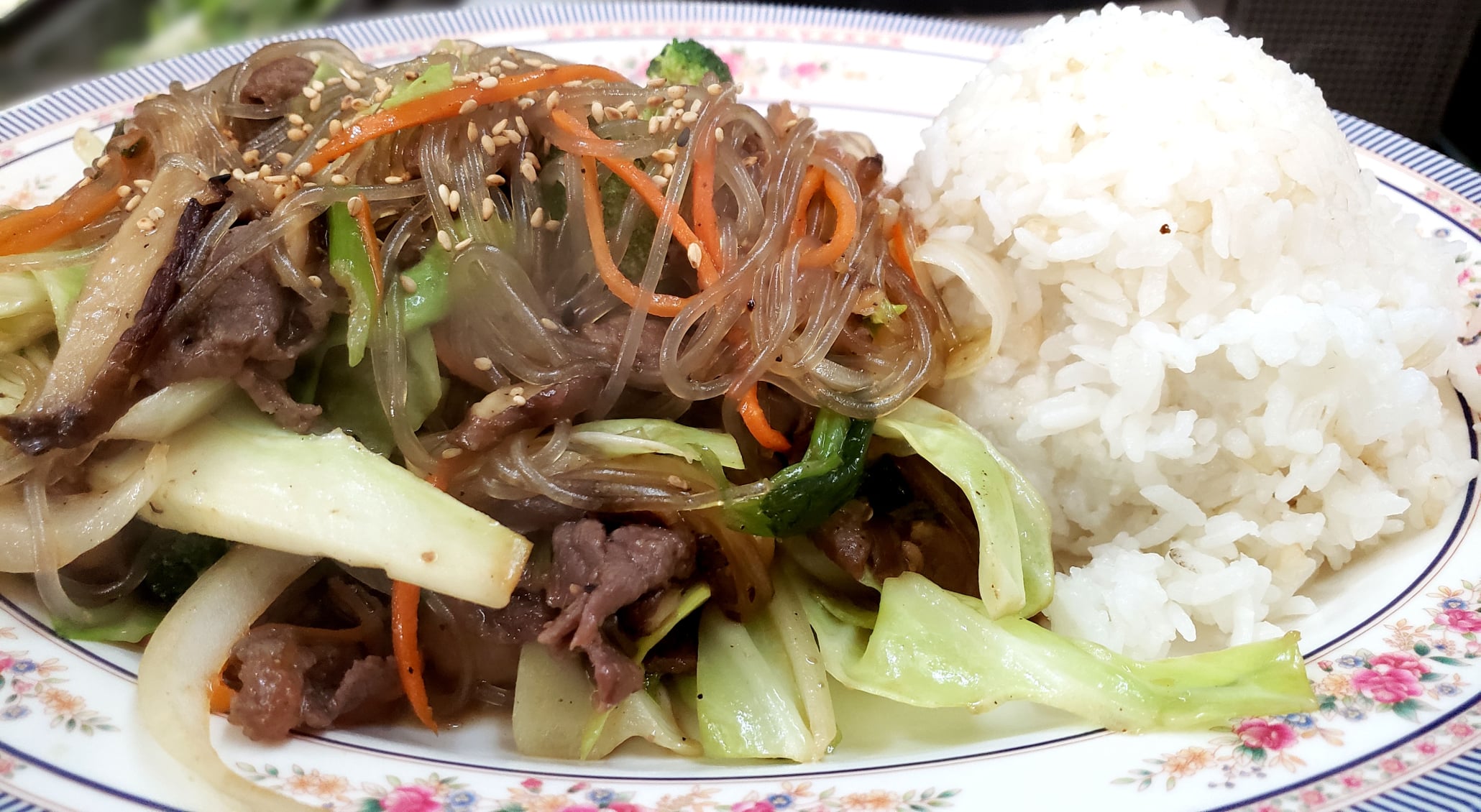
- Dangmyeon (cellophane noodles) – made from sweet potato starch, later central to japchae.
- Gamja guksu (potato noodles) – chewy noodles from potato starch, popular in Hwanghae Province.
- Dotori guksu (acorn noodles) and chilk guksu (kudzu noodles) – regional specialties.
🥢 Japchae’s Unique Story
- Japchae began in the 17th century Joseon court as a stir-fried vegetable dish without noodles. King Gwanghae loved it so much he rewarded its creator with high office.
- By the 20th century, sweet potato starch noodles (dangmyeon) and beef were added, transforming japchae into the dish we know today.
- Today, japchae is both an everyday dish and a celebratory food, symbolizing longevity through noodles.
🌍 Modern Era
- Wheat noodles (milguksu) only became common after 1945, when wheat imports increased.
- Cold noodle dishes like bibim guksu (spicy mixed noodles) and kongguksu (soybean broth noodles) remain popular summer staples.
- Noodles now bridge tradition and modernity, appearing in both home cooking and fusion cuisine.